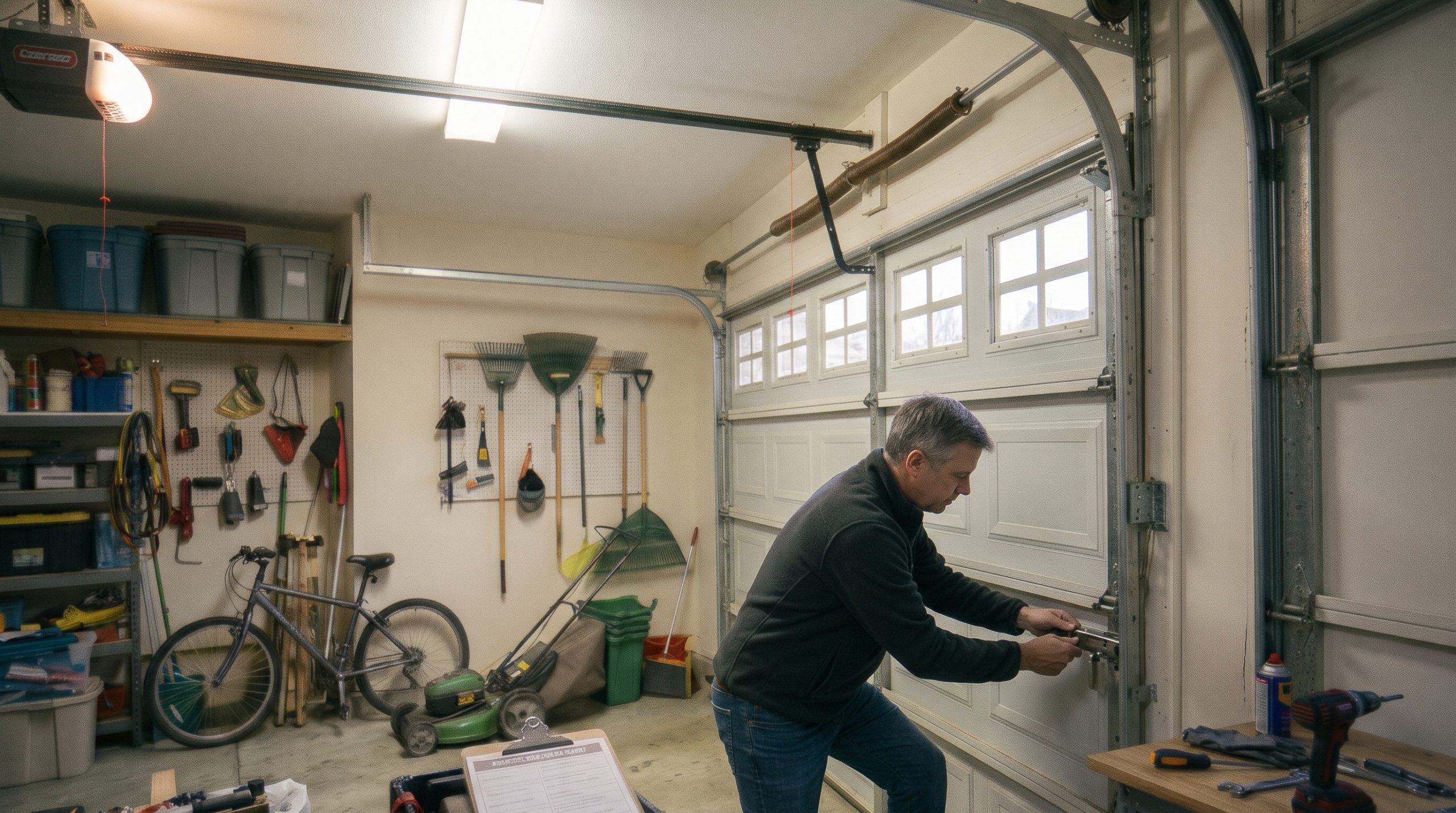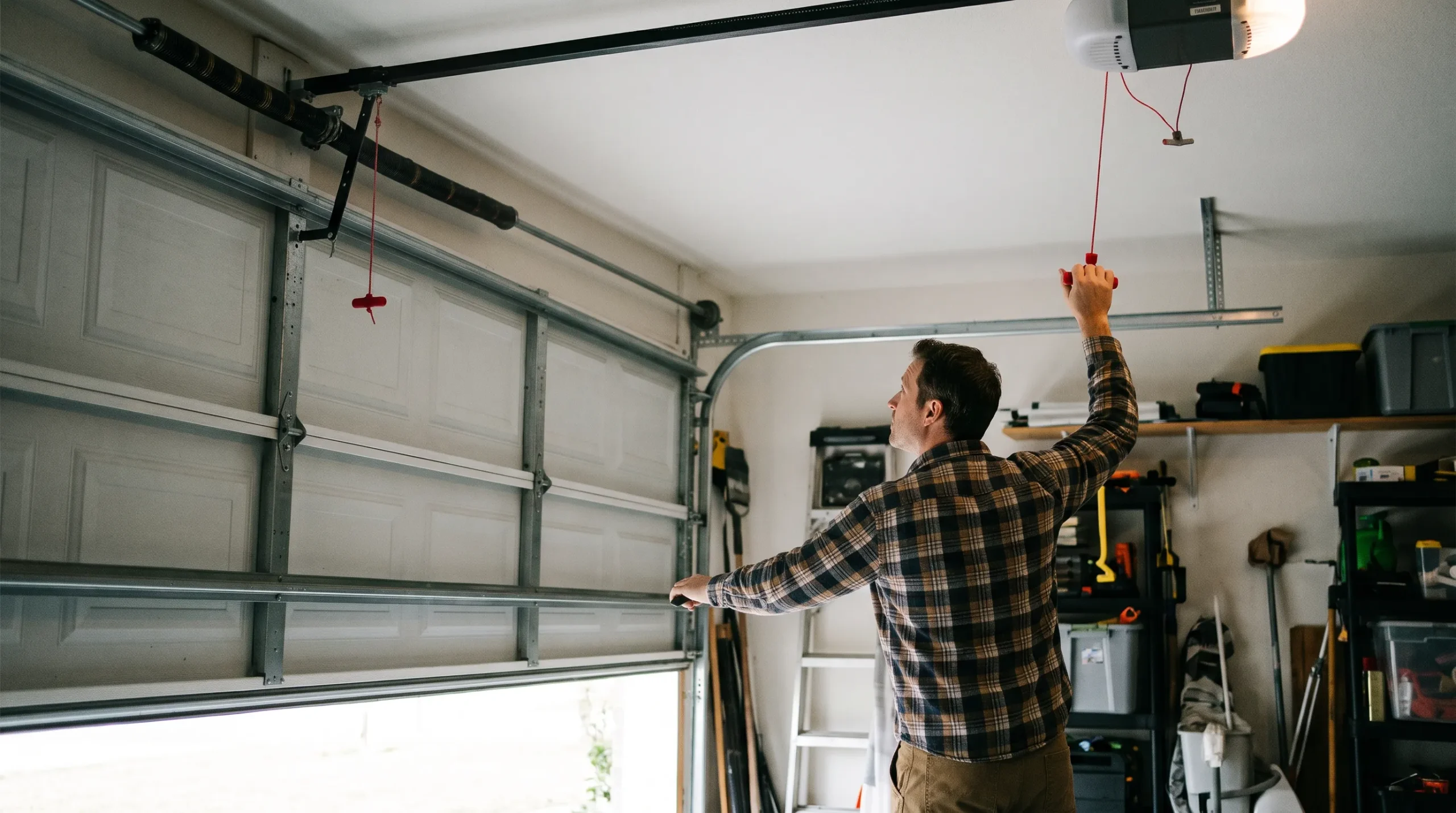
You can open a garage door manually by pulling the emergency release cord, typically a red handle hanging from the opener rail, which disconnects the door from the automatic opener so you can lift it by hand. This is essential during a power outage or when the opener malfunctions, and it only takes a few careful steps: locating the cord, disengaging it, lifting the door with proper technique, and securing it in place. Knowing this process before you actually need it means you’re not troubleshooting for the first time in an emergency.
Key Takeaways
- The emergency release cord, usually a red handle near the center of the door, disconnects the opener so the door can move by hand.
- Pulling the cord should produce a distinct click, confirming the door has disengaged from the motor.
- Lift with your legs, not your back, and get help if the door feels heavier than expected.
- Secure the door with built-in locks, latches, or a temporary prop before working underneath or around it.
- Reconnecting the opener afterward just means pulling the cord back toward the motor until it re-engages.
- A door that’s excessively heavy to lift manually often points to a spring problem that needs professional attention, not just manual effort.
Manual Garage Door Operation: Steps at a Glance
The Five-Step Process for Manual Operation
| Step | What to Do | Safety Note |
| 1. Locate the cord | Find the red handle hanging from the opener rail | Use a stepladder if it’s out of reach; don’t overreach |
| 2. Pull the cord | Pull straight down with a steady motion | Listen for a click confirming disengagement |
| 3. Lift the door | Grasp handles or reinforced sections, lift with your legs | Get help if the door feels too heavy |
| 4. Secure it open | Engage built-in locks or use a temporary prop | Double-check it can’t fall or slide shut |
| 5. Close manually | Lower slowly and evenly, then re-engage the opener | Avoid sudden or jerky movements |
Quick DIY vs. pro guide: The manual open and close process itself is safe for most homeowners to do. If the door feels unusually heavy or won’t stay in position, that’s a sign to stop and call a professional rather than forcing it.
The importance of knowing how to open your garage door manually
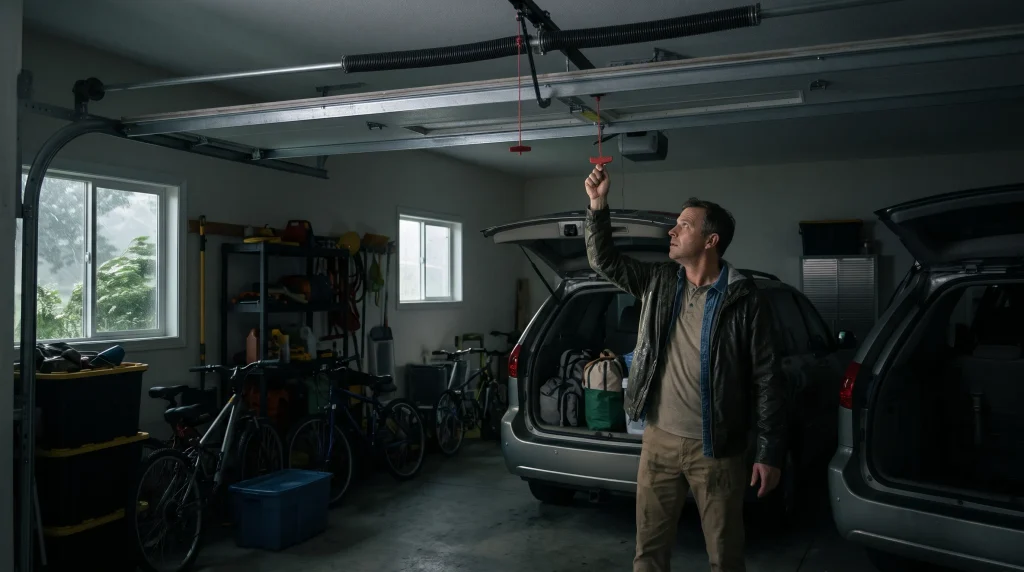
Modern garage door openers are built for effortless daily use, but understanding the manual process matters for reasons beyond convenience.
Why This Skill Matters Beyond Just Emergencies
Knowing how to operate the door manually ensures your safety and prevents accidents when attempting to force open a jammed or malfunctioning door. It also provides a contingency plan during power outages, letting you access your garage and vehicle without waiting for repairs or power to return. Mastering this skill can also save you time and money by helping you avoid unnecessary service calls for something you can safely handle yourself, and it gives you a better sense of how your garage door system actually works day to day.
If your opener itself is the source of ongoing problems rather than just a power outage, our guide How To Fix Garage Door: Beginner’s Guide in 2026 covers the most common causes and fixes.
Preparing to open the garage door manually
A few precautions before you start make the whole process safer and smoother. Taking a couple of minutes here prevents most of the common mistakes people make the first time they try this.
Four Steps to Take Before You Begin
- Ensure Proper Lighting so you can clearly see the components and mechanisms involved.
- Clear the Area of bicycles, tools, or anything else in the door’s path, inside and outside.
- Inspect the Door for visible damage first, seeking professional help if something looks off before proceeding.
- Gather the Necessary Tools, typically just a sturdy stepladder or stool to reach the release cord if needed.
If your door is also secured with an additional lock beyond the opener itself, checking that first saves a confusing moment mid-process. Our guide Effective Ways on How to Lock Your Garage Door from Inside covers the common locking methods and how each one affects manual access.
Mastering Manual Garage Door Operation: A Step-by-Step Guide
With prep work done, the actual process of disengaging and operating the door by hand follows five clear steps.
The Five Steps From Start to Finish
Step 1: Locate the emergency release cord, typically a red rope or handle hanging from the overhead opener mechanism near the center of the door. Use a stepladder if needed rather than stretching beyond a comfortable reach.
Step 2: Pull the emergency release cord straight down with a steady, controlled motion. Listen for a distinct click or clunk confirming the door has disengaged, then verify by trying to move it slightly.
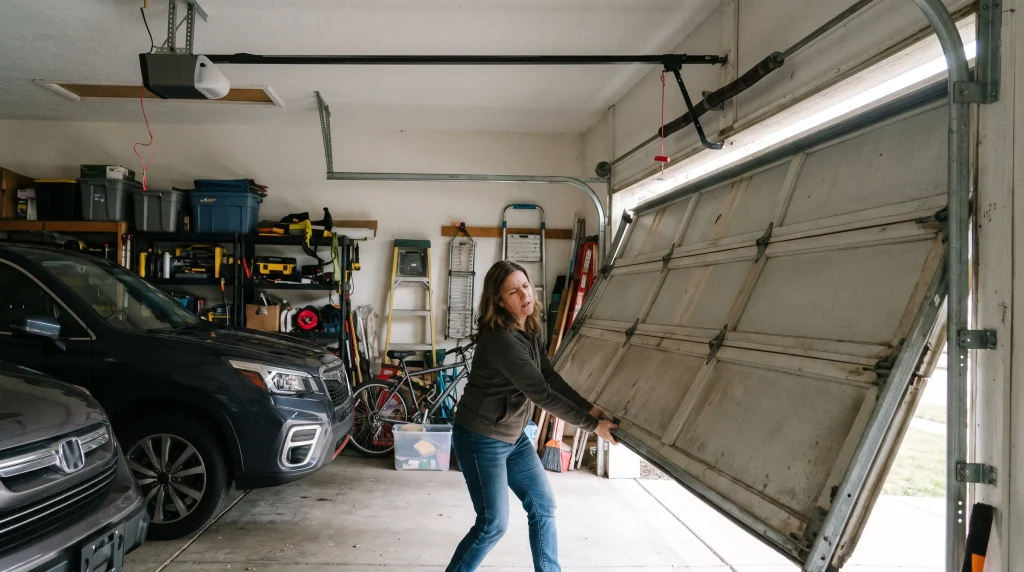
Step 3: Lift the garage door manually, standing to the side facing the center, grasping the door’s handles or reinforced sections with both hands, and lifting slowly using your legs rather than your back. Get help if the door proves too heavy.
Step 4: Securing the garage door in the open position using built-in locks or latches, or a sturdy temporary prop if your door lacks them. Double-check that the door can’t accidentally close or shift.
Step 5: Closing the garage door after manual operation by removing any temporary support, disengaging locks, and lowering the door slowly and evenly using the same careful technique as lifting it.
As This Old House’s overview of garage door systems explains, understanding how these components work together, not just memorizing the steps, makes it much easier to notice when something feels off during manual operation before it becomes a bigger problem.
Troubleshooting common issues when opening a garage door manually
The manual process is usually straightforward, but a few common snags are worth knowing how to handle before you’re caught off guard by one of them.
Five Problems That Can Come Up and What to Do
- The door is too heavy or difficult to lift, which often points to a balance or spring issue that needs a qualified technician rather than more effort.
- The door becomes stuck or jammed, in which case you shouldn’t force it; inspect the tracks, rollers, and hinges for obstructions instead.
- The emergency release cord is inaccessible or stuck, which means you should avoid forcing it and instead consult the manufacturer’s instructions or seek help.
- The door lacks built-in locks or latches, which calls for a sturdy, secure temporary support rather than leaving the door unsecured while open.
- The door is damaged or malfunctioning, which is a sign to stop the manual operation entirely and seek professional assistance rather than continuing.
If your opener specifically is a Genie model that’s the underlying reason you’re operating the door manually in the first place, our guide Troubleshooting Guide: How to Fix a Genie Garage Door That Refused to Open walks through the most common causes for that brand directly.
When Manual Operation Isn’t a Long-Term Fix
Manual operation is meant as a stopgap, not a permanent workaround, and knowing the difference matters for both convenience and long-term cost.
Signs You Need More Than the Manual Release
If you find yourself relying on manual operation regularly instead of occasionally, that’s a sign the opener itself needs attention rather than being worked around indefinitely. A door that requires manual operation more than a handful of times a year, outside of genuine power outages, is telling you something about its condition that’s worth addressing directly.
As Angi’s guide to inspecting and maintaining your garage door notes, a consistent inspection routine catches the kind of opener or spring issues that lead to frequent manual operation before they become a daily inconvenience.
Being Ready for the Next Power Outage
Knowing how to manually operate your garage door turns a stressful power outage or opener malfunction into a minor inconvenience instead. The process itself is simple once you’ve done it, and understanding it ahead of time means you’re never fumbling with an unfamiliar mechanism during an actual emergency, whether that’s a storm-related outage or a Sunday morning opener failure.
All About Doors is happy to walk any homeowner through this process in person, and we can also diagnose whether frequent manual operation points to a bigger issue with your opener or springs. Our licensed technicians are just a call away if the manual release itself becomes stuck or the door doesn’t feel right once you’ve disengaged it. Contact us or give us a call for assistance, maintenance tips, or professional repair.
Frequently Asked Questions
How do you manually open a stuck garage door?
Pull the emergency release cord to disengage the opener, then carefully lift the door while checking for obstructions or misalignments in the tracks that might be causing it to stick.
How do I open a garage door with a PIN?
Enter the code on the external keypad to send a signal to the opener to lift the door automatically. If that fails, use the emergency release cord to open the door manually instead.
How do I reset the garage door after opening it manually?
Pull the emergency release cord back toward the opener to re-engage the door with the automatic system, then test it with the remote or wall button to confirm proper operation.
How do I disengage a garage door?
Pull down the emergency release cord to disconnect the door from the opener for manual operation. Make sure the door is fully closed first to prevent it from falling unexpectedly.
Can I damage my garage door by opening it manually too often?
Occasional manual use shouldn't cause damage, but frequent reliance on it usually means an underlying opener or spring issue that's better addressed directly than worked around repeatedly over time.
How do I know if my garage door is safe to lift manually?
If the door feels roughly balanced and doesn't require excessive force to move, it's generally safe to operate by hand. A door that feels unusually heavy likely has a spring issue and shouldn't be forced regardless of how careful you are.
What should I do if the door won't stay open after I lift it manually?
Check that any built-in locks or latches are properly engaged. If your door doesn't have them, use a sturdy temporary prop rather than leaving the door unsecured while open.
Is it normal for a manually operated door to feel heavier than usual?
No. A properly balanced door should feel manageable to lift by hand. Noticeable extra weight usually signals a spring that's weakening or has already failed.
Should I reconnect the opener myself or call a professional?
Reconnecting the opener by pulling the release cord back into position is a simple DIY step. If the door doesn't behave normally afterward, that's when a professional check makes sense.