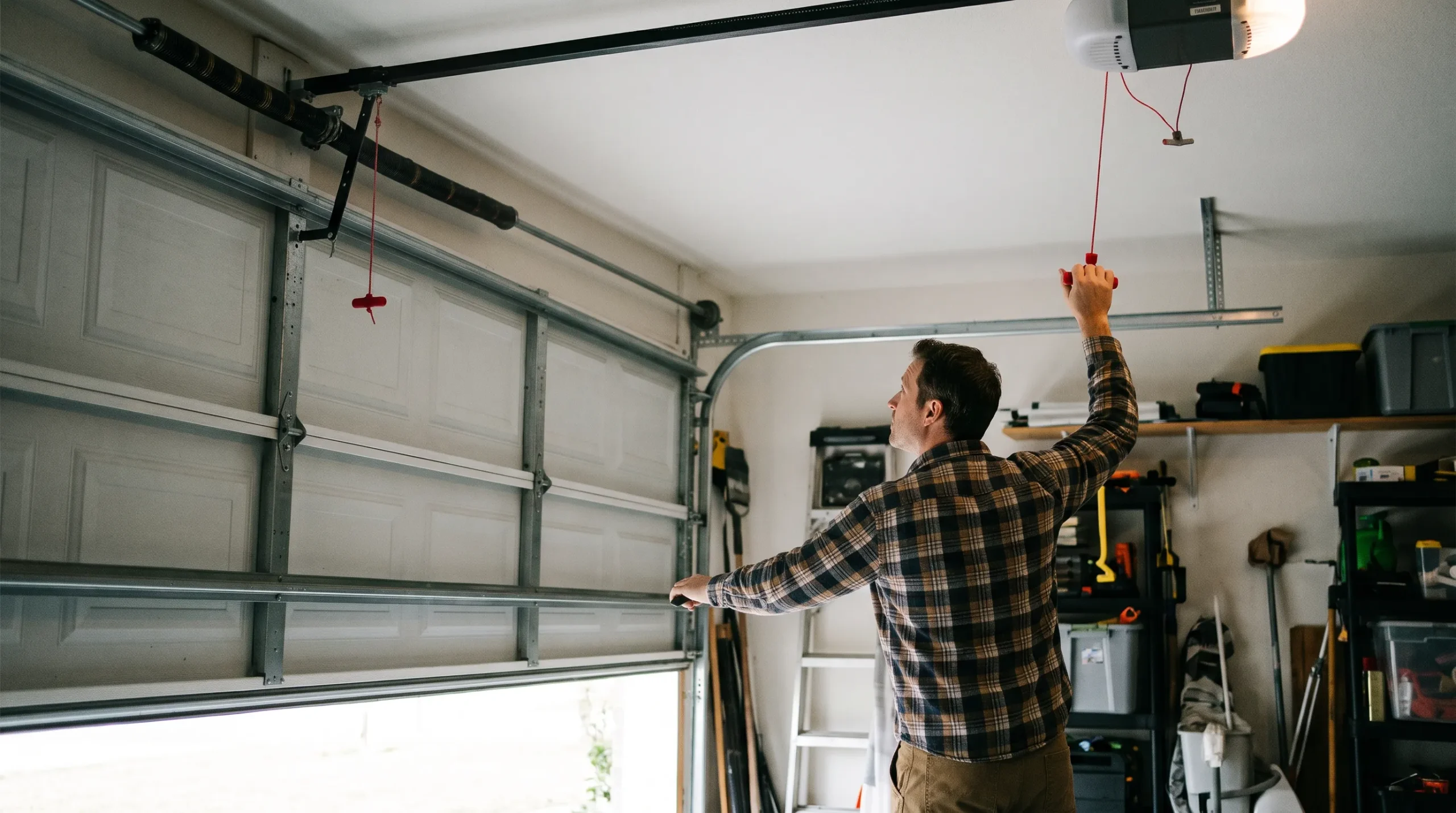
Most garage door problems trace back to five causes: a noisy or worn drive system, a misaligned track, a broken spring, a malfunctioning opener, or damaged weatherstripping. Diagnosing the issue by watching how the door behaves, then lubricating parts, tightening hardware, or adjusting the opener’s sensors and force settings resolves a large share of common problems yourself. Anything involving springs, structural damage, or complex wiring is where residential garage door repair is safer left to a licensed technician than attempted solo.
Key Takeaways
- Noise, misaligned tracks, broken springs, opener problems, and worn weatherstripping cause the vast majority of garage door issues.
- Diagnosing the problem by watching the door’s behavior before touching anything saves time and prevents unnecessary part replacement.
- Lubrication, hardware tightening, and sensor alignment fix a large share of issues without any parts needing replacement.
- Broken torsion springs, structural damage, and complex electrical issues are the clearest signs it’s time to call a professional.
- Monthly visual inspections and lubrication every six months prevent most repairs before they’re ever needed.
- Manufacturer manuals, online tutorials, and professional associations are useful resources if you want to go deeper than this guide.
Common Garage Door Problems and Quick Fixes
Seeing the five most common problems side by side, along with their likely cause and fix, helps you narrow down what’s actually wrong before you start troubleshooting.
Matching Your Symptom to the Right Fix
| Problem | Likely Cause | Quick Fix | DIY or Pro |
| Noisy operation | Worn rollers, hinges, or lack of lubrication | Lubricate moving parts, tighten hardware | DIY-safe |
| Misaligned track | Track bent or dislodged over time | Gently realign with a hammer and pry bar | DIY-safe |
| Broken springs | High-tension torsion springs failing with age | Full spring replacement | Call a pro |
| Malfunctioning opener | Worn motor, frayed cables, faulty sensors | Inspect and repair opener components | DIY-safe to inspect, pro for repair |
| Weatherstripping issues | Cracked or worn seal around the door | Replace the weatherstripping | DIY-safe |
Quick DIY vs. pro guide: Lubrication, hardware tightening, sensor cleaning, and weatherstripping replacement are fine for most homeowners. Spring replacement, structural repairs, and complex wiring should go to a licensed technician.
Garage Door Problems and Their Causes
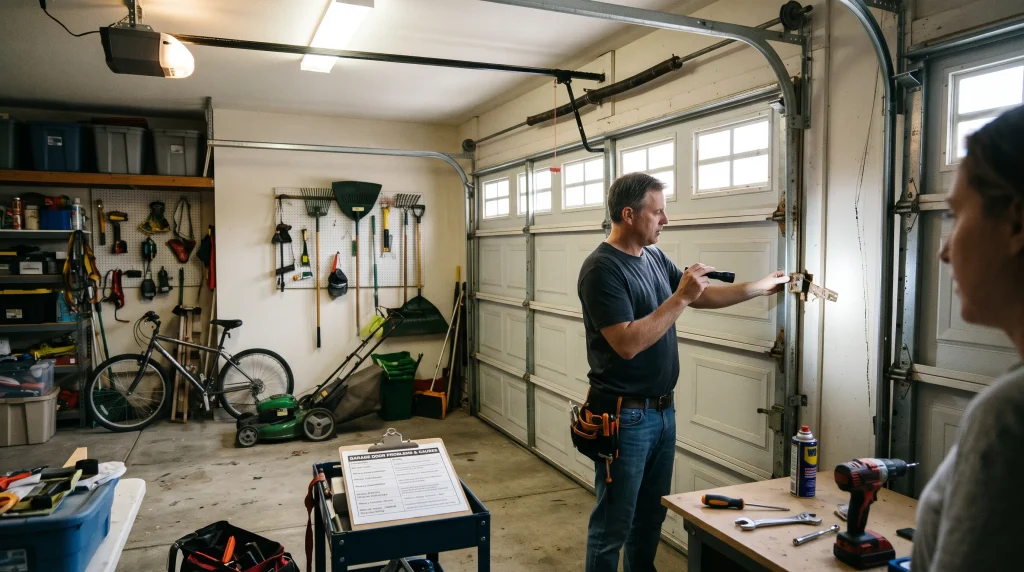
Before diving into repairs, it helps to understand what’s actually causing the issue in front of you. These five problems account for most of the calls a technician gets.
The Five Most Common Garage Door Problems
- Noisy operation can come from worn-out rollers, hinges, or bearings, a lack of lubrication, or a misaligned track. Regular lubrication of moving parts helps reduce the noise.
- A misaligned track develops over time as the track guiding the door’s movement becomes bent or dislodged, causing the door to bind or come off entirely. Adjusting or realigning it usually solves the problem.
- Broken springs happen when the torsion springs that counterbalance the door’s weight fail from age, wear, or improper adjustment. Because of the tension involved, replacing them is best left to a professional.
- Malfunctioning opener issues, like a worn-out motor, frayed cables, or faulty sensors, can prevent the door from opening or closing properly.
- Weatherstripping issues show up as damaged or worn seals that compromise insulation and let drafts or pests into the garage. Replacing the weatherstripping restores the seal.
If you specifically have a Genie opener that refuses to respond at all, our guide Troubleshooting Guide: How to Fix a Genie Garage Door That Refused to Open walks through that exact scenario.
Tools and Equipment for Garage Door Repair
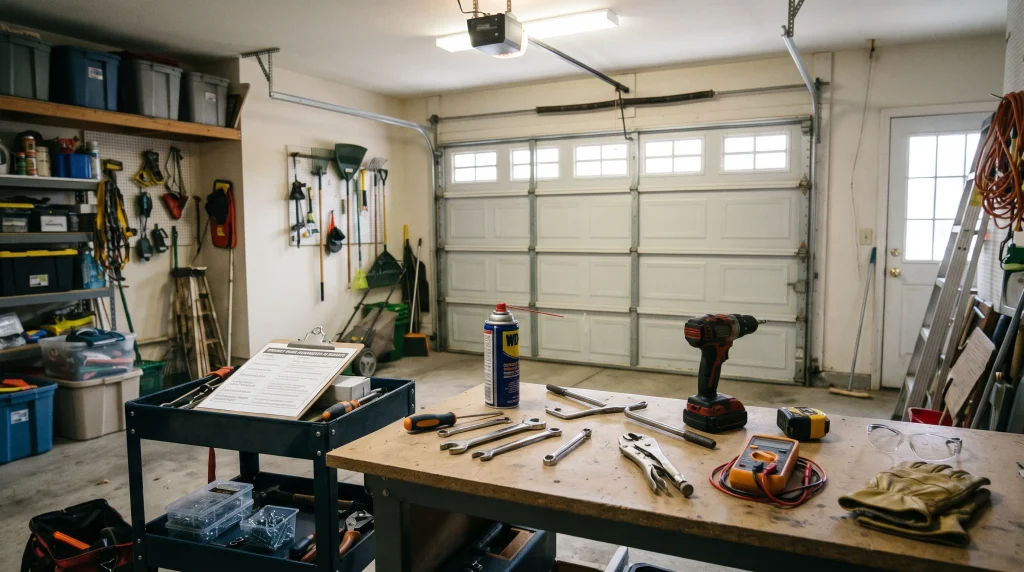
Having the right tools on hand before starting saves you from stopping mid-repair to search for something you don’t have.
What to Gather Before You Start
Basic hand tools (pliers, wrenches, screwdrivers), a ladder or step stool, silicone-based or garage door-specific lubricant, a hammer, a pry bar, clamps, safety glasses, work gloves, and replacement parts like rollers, hinges, or cables as needed for your specific repair.
Safety Precautions for Working on Garage Doors
Garage doors are heavy and operate under high tension, which makes safety non-negotiable before you touch anything.
Five Precautions to Take Before Any Repair
- Disconnect the power source by unplugging the opener or switching off the breaker to prevent accidental operation.
- Use proper lifting techniques, lifting with your legs rather than your back, and getting help if the door feels too heavy.
- Secure the door with clamps or vice grips before working on it, so it can’t fall unexpectedly.
- Wear protective gear, including safety glasses and work gloves, to guard against sharp edges and moving parts.
- Follow the manufacturer’s instructions from the manual or official resources rather than guessing at the repair procedure.
Easy Steps on How to Fix a Garage Door
Once you know what you’re dealing with and you’re set up safely, these four steps cover most repairs from start to finish.
The Four-Step Repair Process
- Diagnosing the problem: Watch the door open and close, noting unusual noises or movements; inspect the track, rollers, hinges, springs, and opener closely, and test the opener’s manual controls to isolate whether the issue is the door or the opener.
- Lubricating and adjusting the components: Apply lubricant to rollers and hinges, gently realign a bent track, and tighten any loose hardware you find along the way.
- Replacing worn-out parts: Identify the faulty component, source the correct replacement for your model, follow the manufacturer’s instructions, and test the door once it’s installed.
- Adjusting the opener and sensors: Correct the force settings if the door reverses unexpectedly or won’t open fully, realign safety sensors, and replace the opener’s battery if it’s behaving erratically.
Fixing Common Garage Door Problems
Even after working through the basics, a few persistent issues deserve their own closer look.
Troubleshooting Five Problems That Don’t Always Resolve on the First Try
- Noisy operation that persists after lubrication usually means worn rollers or hinges that need replacing, or a track that’s still not fully aligned. As The Spruce’s troubleshooting guide for common garage door problems explains, persistent noise after basic maintenance is one of the clearest signs a specific part, not just lack of lubrication, is the actual culprit.
- The door won’t open or close fully, which can trace back to a misaligned track, obstructed sensors, or an opener force setting that needs adjustment.
- The door reverses unexpectedly, usually triggered by an obstruction, misaligned sensors, or a force setting that’s too high.
- Broken springs call for professional replacement given the tension involved and the injury risk of handling them yourself.
- The door is off-track, which means you should stop and not force it back into place, since that risks further damage.
If the opener itself seems disconnected rather than the door being physically off-track, knowing how to manually operate the door safely matters here too, and our guide Mastering the Art of Opening Your Garage Door Manually: A Step-by-Step Guide walks through that process in detail.
When to Hire a Professional for Garage Door Repair
Some situations genuinely call for a certified technician rather than a DIY attempt, regardless of how confident you feel.
Five Situations That Call for Professional Help
- Broken torsion springs, since they’re under enough tension to cause serious injury if mishandled.
- Structural damage, such as a bent or cracked panel or a severely misaligned track.
- Complex electrical issues, which are safer left to an electrician or technician to avoid shock or wiring hazards.
- Safety concerns, meaning if you feel unsafe attempting a repair, that’s reason enough to call for help.
- Specialized equipment needed for repairs that go beyond typical homeowner tools.
As Angi’s guide to what to do when a garage door spring breaks points out, the injury risk from a mishandled spring is severe enough that professional replacement is worth the cost regardless of how mechanically confident you are otherwise.
Garage Door Preventive Maintenance
Regular upkeep does more to prevent repairs than any single fix, and it takes far less time than most homeowners expect.
Five Habits That Prevent Most Future Repairs
- Monthly inspections of the door, track, rollers, hinges, and opener catch developing issues early.
- Lubrication of rollers, hinges, and pulleys every six months keeps everything moving smoothly.
- Weatherstripping maintenance, checking for cracks or gaps and replacing as needed, protects insulation and energy efficiency.
- Opener maintenance, including testing safety sensors and replacing batteries, per the manufacturer’s recommendations.
- Professional inspection annually catches issues before they become bigger problems.
Security is worth folding into this same routine, not treating as a separate project. If you want an added layer of protection beyond what the opener provides, our guide Effective Ways on How to Lock Your Garage Door from Inside covers several methods that pair well with routine maintenance.
When to Repair Your Garage Door vs. Replace It
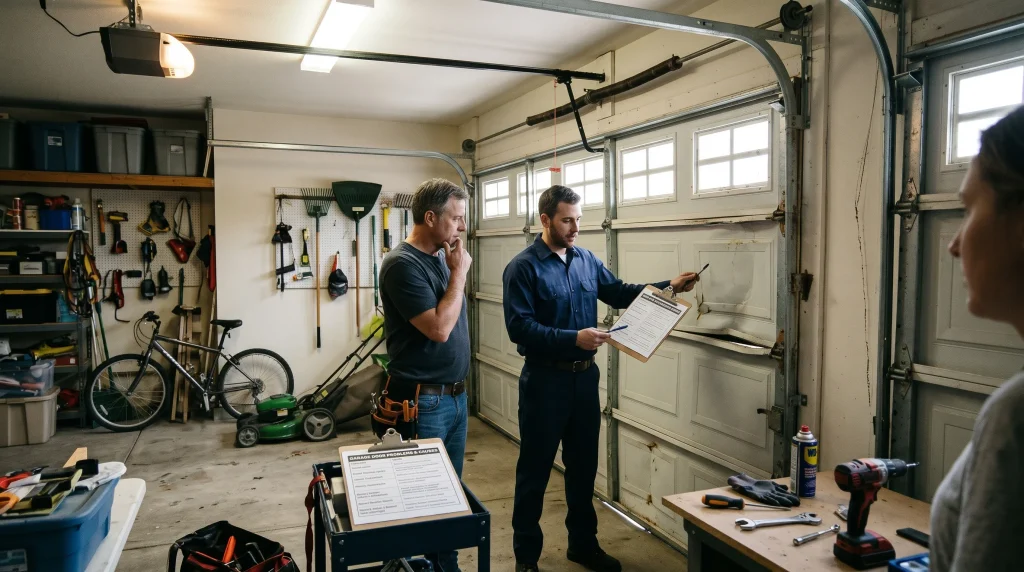
Not every problem is worth fixing indefinitely, and knowing where that line sits saves you from throwing good money after bad. A few clear signals point you toward one option over the other.
Signs a Repair Is the Right Call
If the door is under 10 to 15 years old, the damage is limited to one component, like a spring, sensor, or section of track, and the rest of the system is in good shape, repairing that one part is almost always the smarter and cheaper option. A single failed part on an otherwise healthy door rarely justifies a full replacement.
Signs Replacement Makes More Financial Sense
If you’re calling for repairs more than once or twice a year, if multiple components are failing around the same time, or if the door and opener predate modern safety features like auto-reverse sensors, the repair costs can add up to more than a replacement would have cost outright. An older door also tends to be less energy efficient, which adds a hidden ongoing cost on top of the repair bills. Weighing the cost of the next repair against a fair replacement quote is worth doing before committing to fix something for the third or fourth time.
Fixing Your Garage Door Doesn’t Have to Be Daunting
Most garage door problems come down to a handful of causes, and working through diagnosis, basic maintenance, and the right safety precautions resolves the majority of them without a service call. Knowing where your own skills and comfort level end, especially around springs and electrical components, is what keeps DIY repair safe rather than risky.
All About Doors handles everything from a quick sensor adjustment to a full spring replacement for homeowners who’d rather not tackle a repair themselves. Our licensed technicians diagnose the actual cause before recommending a fix, so you’re never paying for guesswork. Contact us or give us a call for fast, reliable garage door repair.
Frequently Asked Questions
What is the most common problem with a garage door?
Misalignment is one of the most common issues, causing the door to stick or not open and close properly. Regular upkeep and lubrication help prevent it.
Why is my garage door not opening?
Common causes include a power outage, dead remote batteries, or a broken spring. Checking these simple possibilities first often solves the problem without further diagnosis.
How do you fix a misaligned garage door?
Check that the tracks are clean and properly aligned, loosening the screws and gently tapping the track back into place if needed. If you're uncertain, professional assistance is the safer route.
How do you fix an unbalanced garage door?
Disconnect the opener and manually lift the door halfway. If it doesn't stay in place, the springs likely need adjustment, which is a job best left to a professional given the tension involved.
How much does professional garage door repair typically cost?
Costs vary widely by the specific repair, from a simple sensor fix to a full spring replacement, so getting a quote for your specific issue is the most accurate way to budget.
How often should I inspect my garage door?
We recommend a visual inspection monthly, with deeper lubrication and hardware checks every six months, plus a professional inspection once a year.
What tools do I need for basic garage door repair?
A basic tool set covers most simple repairs: pliers, wrenches, screwdrivers, a ladder, lubricant, and safety glasses and gloves for protection.
Can a garage door be repaired without replacing the opener?
Often, yes. Many opener issues trace back to sensors, batteries, or force settings rather than the motor itself, which can be adjusted or repaired without a full replacement.
What's the most common reason garage doors end up needing professional repair?
Our rule of thumb from the field: broken springs and serious track misalignment are the two issues that most reliably require a professional rather than a DIY fix.