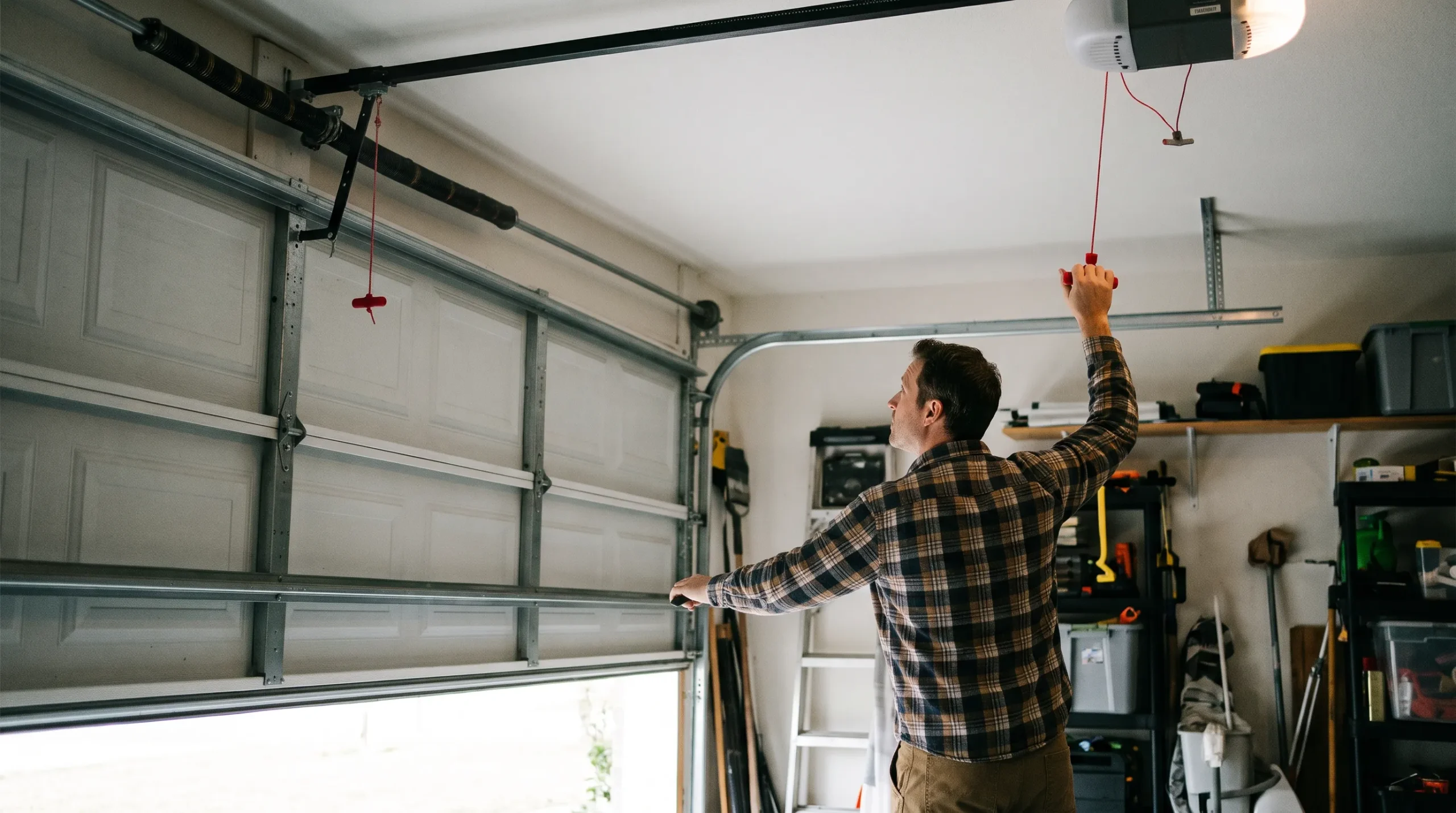
Most torsion springs on a residential garage door are rated for about 10,000 cycles, which works out to roughly 7 to 10 years for an average household, while high-cycle torsion springs can last 20,000 cycles or more, stretching to 14 to 20 years with moderate use. Actual lifespan depends on how often the door cycles, how heavy it is, spring quality, and how well it’s maintained. Simple habits like lubricating the spring and checking door balance can meaningfully extend that window before replacement becomes necessary.
Key Takeaways
- Standard torsion springs are rated for about 10,000 cycles, roughly 7 to 10 years for a typical household.
- High-cycle torsion springs handle 20,000 or more cycles, potentially lasting 14 to 20 years.
- Frequency of use, door weight, spring quality, climate, and maintenance all affect how long a spring actually lasts.
- Visible gaps between coils, difficulty opening the door, and loud snapping noises are the clearest signs of a failing spring.
- Replacing both springs at once, even if only one has failed, keeps tension balanced and prevents uneven wear.
- Standard torsion spring replacement typically runs $150 to $250; high-cycle replacement runs $250 to $400.
Standard vs. High-Cycle Torsion Springs Compared
Seeing both spring ratings side by side helps you decide whether the standard option is enough for your household or if high-cycle is worth the extra upfront cost.
Which Spring Rating Fits Your Household’s Use
| Feature | Standard Torsion Spring | High-Cycle Torsion Spring |
| Cycle rating | About 10,000 cycles | 20,000 to 50,000 cycles |
| Typical lifespan | 7 to 10 years | 14 to 20 years |
| Upfront cost | Lower | Higher |
| Best for | Average daily use | Frequent use, primary entrance |
| Replacement cost | $150 to $250 | $250 to $400 |
Quick DIY vs. pro guide: Checking for visible wear, lubricating the spring, and testing door balance are fine to do yourself. Replacing a torsion spring, standard or high-cycle, should go to a licensed technician.
What Is a Torsion Spring, and Why Is It Important?
Before getting into lifespan specifics, it helps to understand what a torsion spring actually does for your garage door system.
How a Torsion Spring Counterbalances Your Door’s Weight
A torsion spring is a tightly wound, high-tension spring designed to counterbalance the weight of your garage door. It’s mounted horizontally above the door and twists as the door operates, generating the torque needed to lift and lower it with much less effort than the weight alone would require. Without a functional torsion spring, your opener would struggle to move the door at all, and even the most durable springs eventually reach the end of their working life.
Why the Opener Isn’t Doing the Heavy Lifting Alone
It’s a common misconception that the opener motor is what lifts a garage door’s full weight. In reality, the torsion spring does the bulk of that work, and the opener motor mainly provides the smaller push needed to start and guide the motion. This is exactly why a failed spring makes the door feel dramatically heavier: the motor was never designed to lift that weight on its own, and it will either strain badly or fail to move the door at all once the spring can no longer help.
The Average Lifespan of a Torsion Spring
Lifespan is typically measured in cycles rather than years, since usage frequency varies so much between households.
What “10,000 Cycles” Actually Means in Practice
Standard Torsion Springs are rated for about 10,000 cycles. If you open and close your garage door four times a day, that works out to roughly 7 years before replacement becomes likely.
High-Cycle Torsion Springs are built for durability and can handle 20,000 cycles or more, potentially extending lifespan to 14 to 20 years under moderate use, which makes them a common upgrade for garages that double as a workshop or primary daily entrance.
These are estimates, though, and actual lifespan depends heavily on spring quality, door weight, and how consistently the system is maintained. Two identical-looking springs installed on the same day can wear at noticeably different rates if one door gets used far more often, or if one garage runs hotter and more humid than the other.
Factors That Affect the Lifespan of Torsion Springs
Five factors in particular determine whether your spring lands on the shorter or longer end of its expected range.
The Five Variables That Shorten or Extend Spring Life
- Frequency of Use: Doors used often, especially as a primary entrance, wear out their springs faster and need more frequent replacement than a secondary garage that sees light use.
- Garage Door Weight: Heavier doors, like solid wood or insulated models, put more strain on the spring and shorten its lifespan compared to lighter panel materials.
- Quality of the Spring: Higher-quality springs made from durable materials handle frequent use better and last longer overall than budget alternatives.
- Climate and Environmental Factors: Temperature swings and humidity can cause springs to rust and weaken faster over time, especially in coastal or humid regions.
- Lack of Maintenance: Dust, dirt, and missing lubrication increase strain on the spring, causing it to wear out ahead of schedule even if it’s a high-quality part.
Signs Your Torsion Spring Needs Replacement
Knowing what to watch for helps you catch a failing spring before it becomes a safety issue.
Five Warning Signs a Spring Is Nearing the End of Its Life
- Visible Gaps in the Spring: A spring in good condition should be tightly wound, so visible gaps between coils signal real wear.
- Difficulty Opening or Closing the Door: A worn spring loses tension, making the door noticeably harder to move.
- Loud Noises During Operation: A loud bang or pop usually means the spring has already snapped, which is a serious safety issue.
- Slower or Uneven Door Movement: A weakened spring can make the door move unevenly, straining other parts of the system.
- Rust or Corrosion: Rust makes a spring more likely to fail, especially in humid climates or after moisture exposure.
For a broader look at replacement timing and process, our guide Garage Door Spring Replacement: Expert Guide & Cost Breakdown covers both torsion and extension springs from start to finish.
How to Extend the Life of Your Torsion Springs
While every torsion spring has a finite lifespan, a handful of habits can meaningfully push that number higher.
Five Habits That Add Years to Spring Life
- Schedule Regular Inspections: An annual professional inspection catches developing issues before they become failures, often for the cost of a routine service call.
- Lubricate the Springs: Apply silicone-based or lithium grease every 3 to 4 months to reduce friction and prevent rust, avoiding standard grease, which tends to collect dirt.
- Balance Your Garage Door: Test balance by disconnecting the opener and lifting the door manually; adjust if it doesn’t hold position roughly halfway.
- Limit Excessive Use: Using alternate entrances when possible reduces unnecessary cycles on the spring over the course of a year.
- Replace Both Springs: If one breaks, replacing both ensures even tension and prevents the second spring from failing soon after under mismatched load.
Per DASMA’s consumer safety guidance, spring tension and balance issues are among the most common safety concerns in residential garage door systems, which is part of why routine balance checks matter as much as they do.
Professional Repair and Replacement Services
When a torsion spring breaks, DIY repair carries real risk given how much tension the spring holds.
Why This Repair Specifically Calls for a Trained Technician
These springs are under high tension and can cause serious injury if mishandled. A trained professional can replace the spring safely and check the rest of the system for related wear at the same time, including cables, rollers, and the opener’s force settings, which often show early signs of strain around the same time a spring starts failing.
As the International Door Association’s care and maintenance guidance notes, working with a qualified professional for tension-related repairs specifically reduces the injury risk that comes with this kind of job far more than general DIY caution alone.
The Cost of Replacing Torsion Springs
Cost depends on spring type, labor rates, and whether any additional repairs are needed alongside the spring itself.
What Standard and High-Cycle Replacement Typically Run
- Standard Torsion Spring Replacement: $150 to $250, including labor.
- High-Cycle Torsion Spring Replacement: $250 to $400, including labor.
Prompt replacement of a worn spring, even before it fully fails, tends to prevent more expensive repairs down the line. If your system happens to be a LiftMaster, our guide What’s the Real LiftMaster Garage Door Spring Replacement Cost? Find Out Now! breaks down pricing by spring and job type in much more detail.
Getting the Most Out of Your Torsion Springs
A torsion spring’s lifespan comes down to a fairly predictable set of factors: how often the door cycles, how heavy it is, the spring’s quality, and how consistently it’s maintained. Watching for the warning signs above and keeping up with simple maintenance is usually enough to get a spring to the higher end of its expected range rather than the lower end, and it costs far less than dealing with a spring that fails without warning.
All About Doors provides professional torsion spring inspection, maintenance, and replacement for homeowners throughout the area. Our licensed technicians can tell you honestly whether your spring needs replacing now or has some life left, and every replacement includes a full system check covering cables, rollers, and balance. Contact us or give us a call to schedule a torsion spring inspection.
Frequently Asked Questions
When should torsion springs be replaced?
Replace them when you notice signs of wear like gaps between coils, rust, or difficulty opening the door. Most last about 10,000 cycles or 7 to 10 years under typical use.
Do torsion springs wear out?
Yes, every open-and-close cycle gradually weakens their tension. Regular maintenance like lubrication helps, but most springs eventually need replacement around the 10,000-cycle mark.
How do I know if my torsion spring is bad?
Watch for a door that feels heavy, moves unevenly, or won't open at all. A loud snapping sound usually means the spring has already failed, and visible gaps or damage confirm it.
How long do extension springs last?
Extension springs typically last 5,000 to 10,000 cycles, or roughly 5 to 10 years, depending on usage. Routine maintenance can extend that range somewhat.
What is the life of a torsion spring?
It depends on the cycle rating: standard springs handle about 10,000 cycles, while high-cycle versions can handle up to 20,000 or more, with proper lubrication and maintenance extending both.
Can I extend my spring's life without replacing it early?
Yes, consistent lubrication, balance checks, and limiting unnecessary cycles all help a spring reach the higher end of its expected lifespan.
Does climate really affect how long a spring lasts?
Yes, meaningfully. Humidity and temperature swings accelerate rust and material fatigue, which is part of why springs in humid climates often need replacing sooner.
Is a noisy garage door always a spring problem?
Not always, but a loud bang or pop specifically is a strong indicator of a spring failure rather than a different mechanical issue.
Should I replace a torsion spring before it fully breaks?
If you're seeing clear warning signs, yes. Replacing a visibly worn spring proactively is safer and often cheaper than waiting for it to snap.
How often should a torsion spring be inspected?
Our rule of thumb from the field: once a year for most households, more often if the door is used heavily or shows any of the warning signs above.