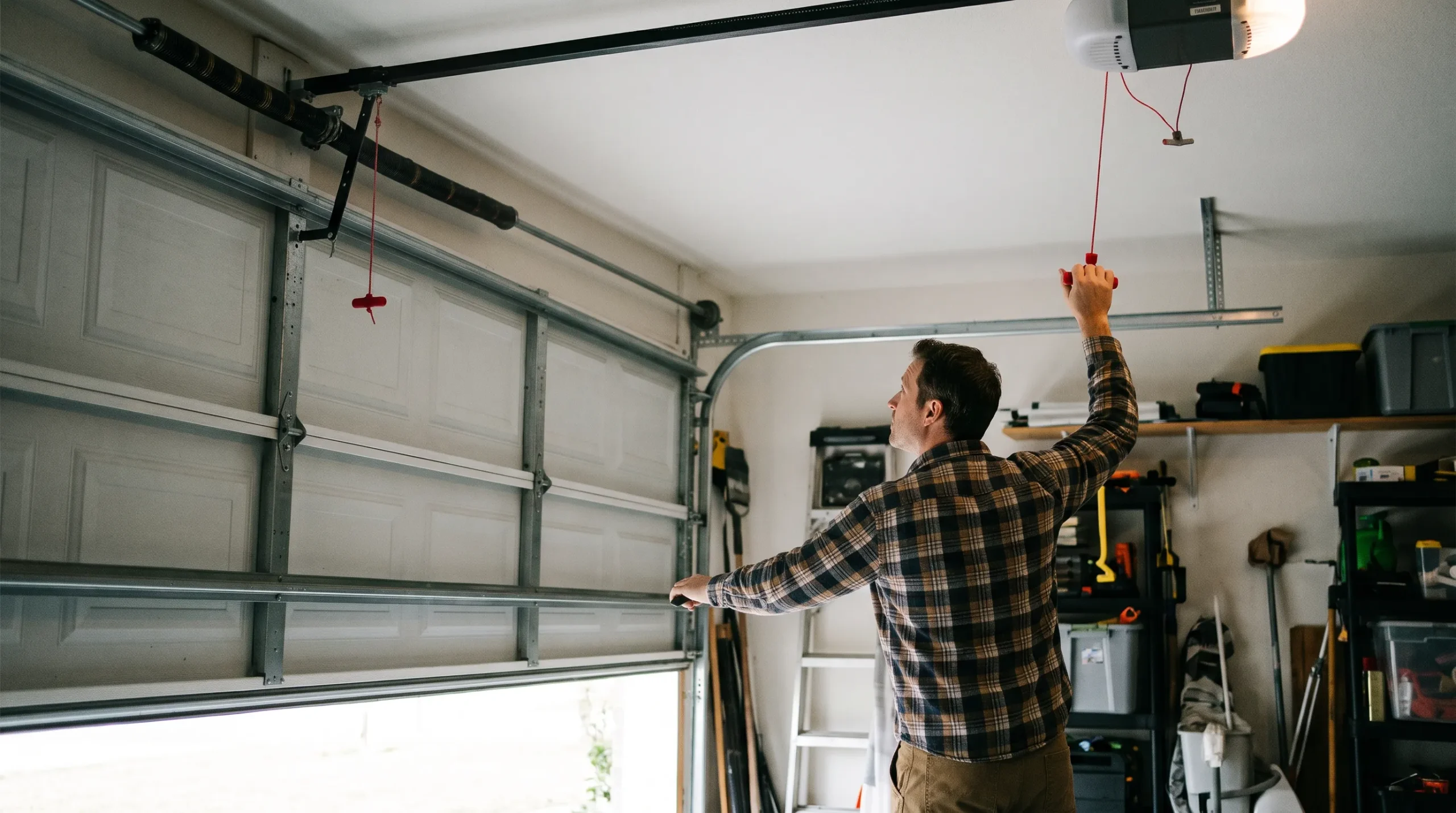
A Genie garage door that won’t open is usually caused by one of six things: a power or electrical issue, a dead remote or faulty wall switch, misaligned safety sensors, insufficient lubrication, incorrect travel limit or force settings, or a mechanical failure like a broken spring or gear. Working through these in order, starting with power and the remote, resolves most cases without a technician. If none of that works, a reset or a call to Genie support is the next step.
Key Takeaways
- Power issues, dead remote batteries, and misaligned sensors account for most cases of a Genie door that won’t open.
- Testing the wall switch separately from the remote helps isolate whether the problem is the door or just one access method.
- Safety sensors need a clear, aligned line of sight to each other, or the opener won’t complete the cycle.
- A hard reset, holding the reset button for 10 to 15 seconds, clears most software or memory glitches.
- If the opener clicks but the door doesn’t move, that usually points to a mechanical issue like a broken spring or gear, not the remote.
- Genie authorized dealers and customer support are worth contacting if troubleshooting doesn’t resolve the issue.
Genie Garage Door Won’t Open: Causes and Fixes at a Glance
Seeing all six causes side by side, along with their typical symptom and fix, helps you jump straight to the right troubleshooting step.
Matching Your Symptom to the Likely Cause
| Cause | Common Symptom | Fix |
| Power or electrical issue | No response at all, no lights | Check outlet, breaker, and power cord |
| Remote or wall switch problem | Wall switch works but remote doesn’t (or vice versa) | Replace batteries, test each control separately |
| Safety sensor misalignment | Door won’t open or closes immediately | Realign sensors, clean lenses |
| Lack of lubrication | Door feels stuck or sluggish | Apply manufacturer-recommended lubricant |
| Incorrect travel limit or force settings | Door stops partway or won’t complete cycle | Adjust settings on the motor unit |
| Mechanical failure | Motor runs or clicks, but door doesn’t move | Inspect for broken spring or gear; call a pro |
Quick DIY vs. pro guide: checking power, testing remotes, cleaning sensors, and lubricating parts are all fine to do yourself. A broken spring or gear, or any repair involving the motor’s internal components, should go to a licensed technician.
Common Reasons Why a Genie Garage Door May Not Open
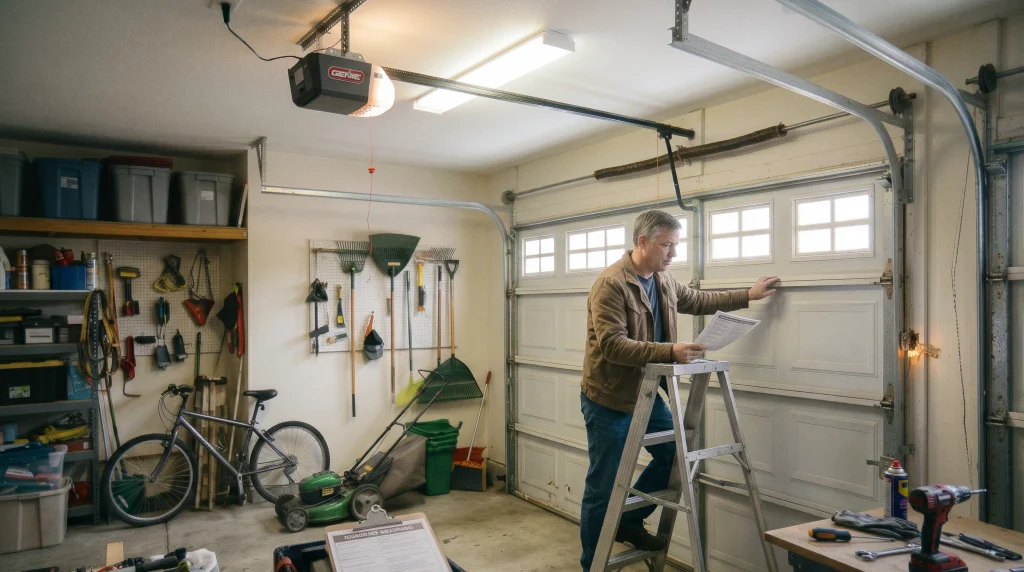
Several distinct issues can cause a Genie opener to stop responding, and narrowing down which one applies makes troubleshooting far faster.
The Six Most Likely Culprits
- Power Source and Electrical Connections: An interrupted power supply or faulty wiring means the door won’t respond to the remote or wall switch at all.
- Remote Control and Wall Switch Issues: Dead batteries or malfunctioning buttons on either control can prevent the door from opening.
- Safety Sensor Misalignment: Sensors that are misaligned or obstructed can stop the door from opening or closing correctly.
- Lack of Lubrication: Insufficient lubrication on the chain or screw drive can make the door stick or move sluggishly.
- Incorrect Travel Limit and Force Settings: Settings that are off can prevent the door from opening or closing completely.
- Mechanical Failure: A broken spring or gear can stop the door from moving even if the opener itself is running.
Sometimes a door that seems stuck is actually locked intentionally rather than malfunctioning. If your opener has a vacation mode or lock feature enabled, our guide Effective Ways on How to Lock Your Garage Door from Inside explains how those features work and how to check whether one is active.
Checking the Power Source and Electrical Connections
Power problems are the simplest to rule out, and they’re worth checking first before moving to anything more involved.
Four Checks Before You Assume It’s Something Bigger
Verify the opener is plugged into a working outlet and that the circuit breaker or fuse hasn’t tripped. Inspect the power cord for visible damage like fraying or cuts. Check the wiring connections between the power source, opener, and components like the wall switch or sensors for looseness or corrosion. Test the outlet itself with a different device to confirm it’s actually providing power.
Per DASMA’s safety guidance for garage door openers, electrical issues with an opener should be treated cautiously, and any wiring that looks damaged or exposed is a sign to stop and call an electrician rather than continuing to troubleshoot on your own.
Testing the Remote Control and Wall Switch
If power checks out, the next likely culprit is one of your two access methods.
How to Isolate Whether It’s the Remote or the Opener
Replace the remote’s batteries with fresh, correctly installed ones. Press each button to confirm it’s transmitting a signal, using a camera’s screen to check for a blinking light if needed. Inspect the wall switch for damage or loose wiring, and press it directly to see if it responds. If you have access to a second remote or switch, try that too to help isolate the actual source of the problem.
Inspecting the Safety Sensors
Genie openers include safety sensors that stop the door from closing on an obstruction, and misalignment here is one of the most common reasons a door won’t open or close correctly.
How to Check and Correct Sensor Alignment
Locate the sensors near the bottom of the tracks, one on each side, and confirm they’re facing each other directly. Clean the lenses with a soft, dry cloth to remove dirt or buildup that can interfere with detection. Test the sensors by placing an object in their path; the door shouldn’t close if they’re working correctly.
Lubricating the Moving Parts
A dry chain, screw, or belt drive can make the door stick or move sluggishly even when everything else is functioning correctly.
How to Lubricate Your Genie Opener Correctly
Identify whether your opener uses a chain, screw, or belt drive, then apply the manufacturer-recommended lubricant to the moving parts following the amount and type specified in your manual. Run the door through its full range of motion afterward to distribute the lubricant evenly, and reapply periodically depending on usage and conditions.
If lubrication alone doesn’t resolve the issue, our broader guide How To Fix Garage Door: Beginner’s Guide in 2026 covers additional troubleshooting steps that apply beyond Genie systems specifically.
Adjusting the Travel Limits and Force Settings
If the door isn’t opening or closing fully even with everything else in good shape, the travel limit or force settings are the next thing to check.
How to Correct Travel Limits and Force Settings
Locate the adjustment controls on the motor unit, then check whether the door is reaching its fully open or closed position, adjusting the travel limit settings if it isn’t. Adjust the force settings if the door struggles to move, following the manufacturer’s instructions for how much power to apply. Test the door through its full range of motion after each adjustment, repeating as needed until performance is correct.
Resetting the Genie Garage Door Opener
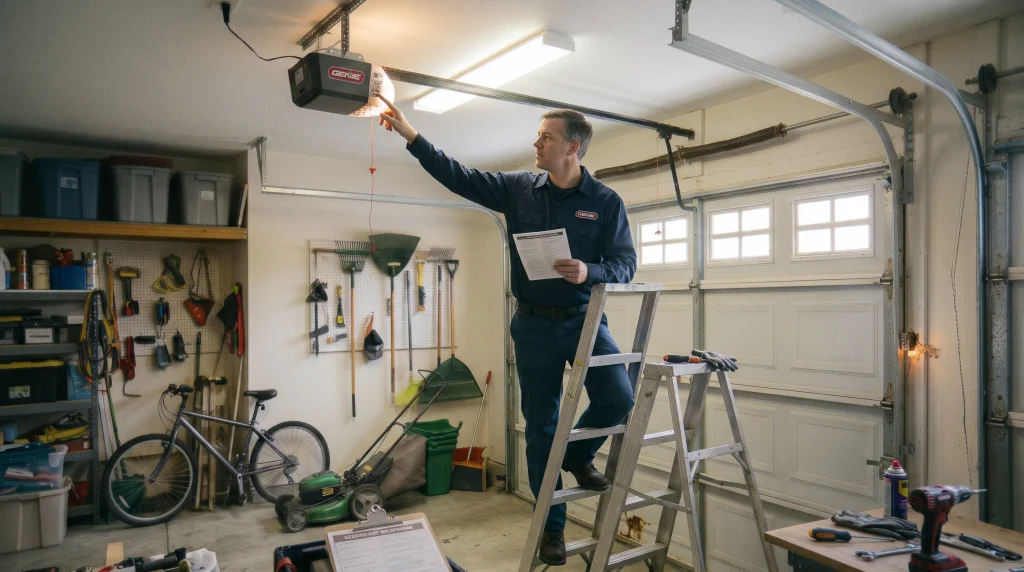
If troubleshooting the individual components hasn’t resolved the issue, a reset can clear software or memory glitches that are harder to diagnose directly.
How to Perform a Hard Reset
Locate the reset button on the motor unit, then press and hold it for 10 to 15 seconds until the lights blink or the unit beeps. Reprogram any remotes or wall switches afterward, and re-adjust travel limits and force settings once the reset is complete.
If your door needs to stay accessible while you work through this process, our guide Mastering the Art of Opening Your Garage Door Manually: A Step-by-Step Guide explains how to safely operate it by hand in the meantime.
Seeking Professional Help and Contacting Genie Customer Support
If you’ve worked through every step above and the door still won’t open, it’s time to bring in outside help.
When to Call In Genie Support or an Authorized Dealer
Reach out to a Genie authorized dealer or service provider for issues beyond basic troubleshooting, since they have the tools and expertise for more complex repairs. Genie customer support can offer additional guidance or point you to a local provider.
If a professional inspection confirms the opener is beyond repair, replacement may be the more cost-effective path, and as Angi’s guide to garage door opener styles explains, matching the new opener’s drive type and features to your actual door and garage matters more than simply replacing with the same model by default.
Getting Your Genie Opener Back to Working Order
A Genie garage door that won’t open almost always traces back to one of six causes, and working through them in order, power, remote, sensors, lubrication, settings, and mechanical issues, resolves the vast majority of cases without professional help. Knowing when to stop troubleshooting and call for support saves time once you’ve genuinely exhausted the DIY options.
All About Doors diagnoses and repairs Genie garage door systems for homeowners who’d rather not troubleshoot alone, and our licensed technicians can identify the exact cause quickly rather than guessing through each possibility. Contact us or give us a call and let our team get your Genie opener working again.
Frequently Asked Questions
What do you do if your garage door opener won't open?
Start by checking the power source to confirm the opener is plugged in and the breaker hasn't tripped. If it's still not working, inspect the remote batteries and sensors, then try opening the door manually to isolate whether the issue is the door or the opener.
How do I unlock a Genie garage door opener?
Locate the manual release cord, typically a red cord hanging from the opener mechanism. Pulling it disengages the opener so you can lift the door by hand, which is especially useful during a power outage or when the door is stuck.
Why won't my Genie garage door open, it just clicks?
Clicking without movement usually points to a malfunctioning motor, faulty wiring, or a locked door. It can also mean the opener is being blocked by a broken torsion spring or damaged cables, which need professional attention.
What do I do when my Genie opener isn't working at all?
Check for a power issue or dead remote batteries first, then clean the sensors and confirm nothing is blocking the door's path. If the problem persists, try a reset, and contact a professional if that doesn't help.
How do I reset my Genie door opener?
Unplug the opener and wait about 30 seconds before plugging it back in, or locate the "Learn" button, press and hold it until the LED blinks, then reprogram your remote or keypad.
How do I know if my Genie opener's motor has failed?
Signs include the motor running but not moving the door, unusual grinding or straining sounds, or the opener not responding at all even with confirmed power. A technician can confirm motor failure versus a different mechanical issue.
Can weather affect my Genie garage door opener?
Yes. Extreme cold can affect lubrication and battery performance, while humidity can contribute to sensor lens fogging or wiring corrosion over time, both of which can mimic other problems.
Is it normal for a Genie opener to need resetting often?
No. An opener that needs frequent resets usually has an underlying issue, such as a failing logic board or a wiring problem, that a reset only temporarily masks rather than fixes.
Should I replace my Genie opener or repair it?
If the opener is under 10 years old and the issue is isolated to one component, repair is usually the better value. Frequent failures or an opener beyond that age range often make replacement the more practical choice.