Exterior garage light fixtures improve nighttime safety, deter intruders, and boost curb appeal all at once, with wall-mounted fixtures, motion-activated lights, and pendant lights covering most homeowners’ needs. LED lighting offers the best mix of efficiency and lifespan, while weather-resistant, UV-protected materials keep fixtures looking good through the elements. Matching the fixture style to your home’s architecture and installing at the right height makes the difference between lighting that just works and lighting that actually looks intentional alongside your garage door.
Key Takeaways
- Well-placed garage lighting improves nighttime safety, deters intruders, and adds real curb appeal and home value.
- Wall-mounted, motion-activated, and pendant fixtures each suit different needs, from broad illumination to focused security.
- LED lights offer the best combination of efficiency, lifespan, and brightness options for most garages.
- Weather-resistant, UV-protected fixtures made from durable materials hold up better against sun, rain, and humidity.
- Installing fixtures 6 to 8 feet above the ground provides even illumination without excessive glare.
- Layering wall, pathway, and accent lighting creates a garage exterior that’s both functional and visually appealing.
Exterior Garage Light Fixture Types Compared
Seeing the three main fixture types side by side makes it easier to decide which one, or which combination, actually fits your garage.
Which Fixture Type Fits Your Needs
| Type | Best For | Pros | Cons |
| Wall-Mounted | General illumination | Easy to install, many styles available | Needs strategic placement for even coverage |
| Motion-Activated | Security-conscious homeowners | Energy-efficient, deters intruders | Can trigger from animals or passing traffic |
| Pendant | Covered entryways, overhangs | Stylish, focused lighting | Limited coverage for larger areas |
Quick DIY vs. pro guide: Installing most wall-mounted or pendant fixtures is a manageable DIY project for a confident homeowner. Wiring new circuits or integrating fixtures with a home security system is best left to a licensed electrician.
The Importance of Exterior Garage Light Fixtures
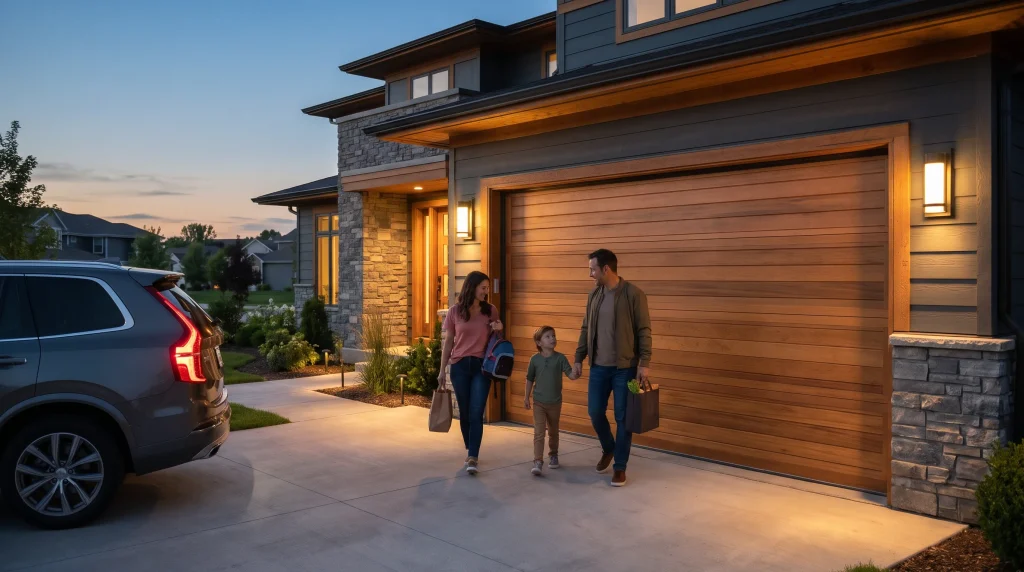
Exterior garage light fixtures do more than decorate; they’re a functional part of your home’s safety and curb appeal, working around the clock in a way that’s easy to overlook until something goes wrong.
Four Ways Good Lighting Pays Off
- Enhanced Safety: Well-lit garages reduce accidents when driving in and out, especially at night or in bad weather, improving visibility for both drivers and pedestrians navigating the driveway.
- Better Security: A well-lit exterior deters burglars, since criminals tend to avoid homes with strategic lighting that exposes their movements and removes the cover of darkness they rely on.
- Improved Curb Appeal: The right lighting highlights architectural features and creates a welcoming feel for guests and passersby, day or night.
- Added Value: Quality exterior lighting is functionality buyers notice during a walkthrough, making it a smart long-term investment in the home’s overall appeal.
Types of Exterior Garage Light Fixtures
Choosing the right fixture type depends on what you’re prioritizing, whether that’s broad illumination, security, or style, and most garages actually benefit from combining more than one type rather than relying on a single fixture.
Three Common Fixture Types and Their Tradeoffs
Wall-Mounted Fixtures are a classic choice, typically installed on either side of the garage door for ample illumination, available in styles from modern to traditional. They’re easy to install but need strategic placement for even lighting.
Motion-Activated Lights switch on automatically when they sense movement, offering energy efficiency and security benefits, though they can occasionally trigger from passing animals or vehicles.
Pendant Lights add sophistication and work especially well for garages with covered entryways or overhangs, offering stylish, focused lighting, though they may not cover larger areas sufficiently on their own.
Style Considerations: Matching Your Home’s Aesthetic
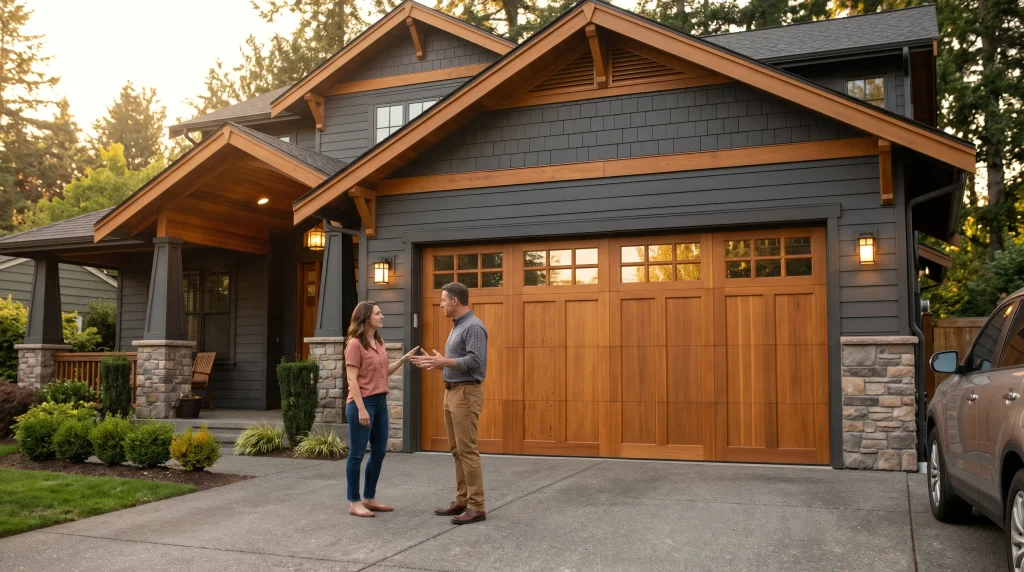
Choosing fixtures that complement your home’s overall style matters as much as the fixture’s function, since even a technically excellent light fixture can look out of place if it clashes with the rest of the house.
Style Recommendations by Home Type
- Modern Homes suit minimalist designs with clean lines and metallic finishes, with black or brushed nickel working particularly well.
- Traditional Homes pair nicely with lantern-style fixtures or ornate detailing, in warm finishes like bronze or brass.
- Rustic Homes benefit from natural materials like wood or wrought iron, with barn-style lighting adding vintage charm.
If your garage door itself has a modern wood look, coordinating your lighting choice with that style matters even more. Our guide Best Modern Wood Garage Doors: Trusted Styles covers the clean-lined styles that these minimalist fixtures pair with especially well.
Energy-Efficient Options for Exterior Garage Lighting
Energy efficiency reduces utility bills and environmental impact without sacrificing functionality.
Three Energy-Efficient Lighting Options
- LED Lights offer a long lifespan and low energy use, available in various brightness levels and color temperatures for any garage setup.
- Solar-Powered Lights charge during the day and light up at night without relying on electricity, ideal for garages with good sun exposure.
- Energy-Saving Bulbs like CFLs and halogen incandescents consume less energy than traditional bulbs, though they don’t last quite as long as LEDs.
Weather-Resistant Features to Look for in Exterior Garage Lights
Since these fixtures face constant exposure to the elements, weather resistance should be a top consideration rather than an afterthought once you’ve already picked a style you like.
Three Weather-Resistant Features Worth Prioritizing
- Waterproofing ensures fixtures are rated for wet or damp locations, withstanding rain, snow, and humidity without losing functionality.
- UV Protection through UV-resistant coatings prevents fading or degrading under prolonged sun exposure.
- Durable Materials like stainless steel, aluminum, or weather-resistant plastics resist rust, corrosion, and general wear.
As Angi’s guide to inspecting and maintaining your garage door points out, exterior fixtures near the door benefit from the same seasonal inspection routine as the door itself, since both face similar weather exposure and wear patterns.
Enhancing Security with Strategic Garage Lighting
Thoughtful placement of your lighting can meaningfully boost your home’s overall security, often more effectively than a single bright fixture placed without much planning.
Three Placement Strategies That Improve Security
- Illuminate Entry Points by placing lights near garage doors, side doors, and windows to eliminate dark spots where intruders might hide.
- Pathway Lighting ensures safe navigation for you and guests while discouraging trespassers from approaching unnoticed.
- Combine with Security Systems, integrating lights with your home security setup so they can be programmed or controlled remotely.
Per DASMA’s consumer safety guidance, well-lit entry points are one of the simplest and most effective deterrents available to homeowners, and pairing that lighting with a properly functioning garage door and opener rounds out a genuinely solid home security setup.
Balancing Functionality and Curb Appeal in Exterior Garage Lighting
Getting both style and practicality right takes a bit of planning, but the result is worth it, especially since the same fixtures work day and night, functional after dark and decorative during daylight hours.
Three Ways to Balance Style and Function
- Layered Lighting combines wall-mounted, pathway, and overhead lights for a well-lit, visually appealing space.
- Accent Lighting highlights architectural features, plants, or decorative elements for added depth around the garage.
- Coordinated Design across fixtures, matching finish and style, creates a cohesive overall look.
Lighting works best as part of a complete exterior plan, including the door itself. Our guide Wooden Garage Door Panels: Durable, Stylish & Customizable Options covers panel styles that pair naturally with the fixture styles discussed here.
Lighting Up Your Garage the Right Way
Exterior garage light fixtures are more than a finishing touch; they genuinely improve safety, security, and curb appeal all at once. Choosing durable, energy-efficient fixtures in a style that matches your home turns a functional necessity into a real design feature, and getting the placement and height right makes an even bigger difference than most homeowners expect.
All About Doors helps homeowners pair the right garage door with the right exterior lighting for a cohesive, secure look. Contact us or give us a call to talk through fixture and door options together.
Frequently Asked Questions
How do I choose the right size and style of light fixture for my garage exterior?
Consider your garage's size and your home's overall style. Larger garages benefit from oversized fixtures, while smaller spaces need proportional lights, and matching the design to your home's aesthetic creates a cohesive look.
Are LED lights suitable for outdoor garage lighting, and what are their benefits?
Yes, LED lights are ideal for exterior use due to their energy efficiency and long lifespan. They provide bright, consistent light, require minimal maintenance, and hold up well against harsh weather.
How high should I install exterior garage light fixtures for optimal illumination?
Install fixtures roughly 6 to 8 feet above the ground for proper illumination without excessive glare, placing wall-mounted fixtures on either side of the garage door for even coverage.
What maintenance is required to keep exterior garage light fixtures in good condition?
Clean fixtures regularly to remove dirt and debris, check for loose connections, replace burned-out bulbs promptly, and inspect for weather damage like rust or cracks to keep everything functioning well.
How many light fixtures does a typical two-car garage need?
Most two-car garages do well with two wall-mounted fixtures flanking the door, plus a motion-activated light covering the driveway approach, though larger properties may benefit from additional pathway lighting along walkways leading to the entry.
Can I mix motion-activated and wall-mounted fixtures?
Yes, and many homeowners do exactly that, using steady wall-mounted lights for general illumination and motion-activated fixtures specifically for security around entry points and darker corners of the property.
Do solar-powered garage lights work well in winter?
They can, but shorter daylight hours and snow covering panels can reduce their charging efficiency, so homes in colder climates may want a wired backup option for consistent winter lighting.
What wattage is ideal for exterior garage lighting?
Most homes do well with fixtures in the 800 to 1,100 lumen range per fixture, which corresponds to roughly a 60 to 75-watt equivalent in LED bulbs, though larger areas may need more.
Should garage lights be on a separate switch from house lights?
We generally recommend it, since a separate switch, or a motion sensor and timer setup, gives you more control over exterior lighting without affecting your interior lighting habits.